Cafe Roubaix

Despre ciclismul de azi şi cel de altădată

Archive for the category “Interviews”

Petr Vakoč: “My future is in the Ardennes”

In recent years, more and more riders kept emerging from Central Europe, and one of these is the Czech Petr Vakoč, who had a superb season in 2013, winning the U23 Vuelta a la Comunidad de Madrid, the Grand Prix Kralovehradeckeho kraje, the Okolo Slovenska, a stage in the Czech Tour, as well as finishing second in the European Championships that took place in his home country.

Now, Petr Vakoč is embarking on a new adventure, with Omega Pharma-Quick Step, that has offered him a pro contract after the results he had with its feeder team, Etixx-Ihned. What lies ahead of him and what does he hope to get over the years? You can find out by reading the following interview, for which Petr made some time this week, during his training camp in Spain.

– Petr, what’s your story with cycling, how did you came up to this sport?  

I started riding a bike when I was really young. My parents were active and so I have done a lot of sports with them when I was a small kid. I have always liked cycling a lot and I was also quite competitive. When I was six years old I did my first race and I loved it. Since then I started to race from time to time and when I was ten years old I started to ride for a local bike club. But at the time I was still swimming, playing football, tennis and trying other sports. When I was fifteen, I moved to Dukla Prague, where we started to take cycling more seriously. That was also the time when I started to focus on road rather than MTB.

– You raced for three amateur teams: Dukla Prague, CC Etupes and Etixx-Ihned. How important were these teams in your development?   

All of the teams were really important for me. At Dukla I learned how the race on the road and also on the track and it played a huge role in my development and growing passion for cycling. I also spent a few months as a Junior and almost the whole first U23 season in the World Cycling Centre team run by the UCI, which was another great experience. The following year I got the opportunity to ride for CC Etupes and that was a big step for me. I had a great time there and learned a lot, but finally, it was this year’s team, Etixx-Ihned, which probably had the biggest impact on me. It was a huge motivation being in the feeder team of my dream team, Omega Pharma-Quick Step. Our team was successful in almost every race and when I saw my teammates winning, it gave me another boost, because I started to believe I can win too.

– In 2013, you were second in the European Championships. What were your feelings after that result?

I was very, very happy! Being on the podium there had been my dream since I knew the European Championships would be held in my country. Staying on the podium in front of my fans was really emotional. Of course I had some regrets, as the stars jersey was really close, but those regrets disappeared fast and now I feel just happy for the accomplished dream!

– Were you disappointed not to ride the Tour de l’Avenir and the World Championships? 

Yes, I really was. Especially for not riding Tour de l’Avenir. I had been training hard for it and then realized that our national team will not ride because of some mistake in the application process. That was really hard to accept. I was looking forward to that race. Not riding the Worlds was another disappointment, as the circuit would had suited me well. But instead of being bitter, I choose to focus on the coming season, as I had already signed for Omega Pharma-Quick Step. Then I was a commentator of the U23 race for the Czech TV and I enjoyed it, although I still definitely prefer to race than to be a commentator.

– What’s your best memory as an U23 rider?  

I was thinking a lot about this question, as I had a lot of great memories. I think it was staying on the podium at the European Championships.

– What are the goals for your first World Tour season?  

I know it will be a huge step, so for me it will be very important to gain experience and get used to a different style of racing. I want to be a good part of the team and help my teammates. And I want to be ready when there is an opportunity for me to grab it!

– Did you get to talk to the team about the races you will do?

Yes, I already know my racing programme for the Spring. Most of the races will be new for me, but I know some from TV already.

– You are good on short climbs, so will the Ardennes Classics and the Italian one-day races be your objectives in the future? 

I am pretty much an all-rounder, but it is true that short climbs suit me most. I really like the Ardennes type of races, I have even had an opportunity to ride the U23 Liège–Bastogne–Liège and I loved it. In the future I would definitely like to perform well in the Ardennes Classics.

Michele Acquarone: Giro, Italian races and the future of cycling

In the two years he spent at the head of the Giro d’Italia, Michele Acquarone helped the Corsa Rosa develop and become increasingly popular, not only among fans, but also among the top riders, some of the biggest names in the peloton coming at the start with the objective of winning the prestigious maglia rosa. Thus, the Giro has had many spectacular moments that helped, just as the organizers wanted to, its aura of being the hardest race in the world in the most beautiful place in the world.

Assisi, Passo dello Stelvio, Matera or Tre Cime di Lavaredo are just some of the moments of reference when speaking about Giro d’Italia in the last two years, moments that are due not only to the main actors, but also to former director Michele Acquarone, whose goal was to make the Giro an internationally recognized brand, a race for fans around the world, not just for the Italians.

If he succeeded or not, this is a thing only the supporters of the race can say. What is certain is that Michele Acquarone changed the typology of a Grand Tour director, choosing to be in permanently contact with the public, to communicate with fans through social media and ask them to have their say on the Giro d’Italia route. How was the experience of these last couple of years for him? What does he think will be the future of the race and the future of cycling? Find out in the following interview.

– Mister Acquarone, what were your goals when you became director of the Giro d’Italia?

My goal since the first day, September 1st, 2008, when I’ve become Managing Director at RCS Sport and then with even greater force since September 1st, 2011 when I’ve taken over the Giro (and cycling) was twofold: on one hand, to grow the Giro d’Italia and bring it to the level of the Tour de France, and on the other, work with the entire cycling family to developour sport globally and bring it to the level of bigger sports (tennis, golf, motorsports). In both cases we are talking about ambitious goals, but certainly within our reach. I’m sorry to be stopped in the middle of a job that brought big benefits on both fronts.

– Two years later, you can draw a line and look back at your work. What are your conclusions?

The Giro has made tremendous strides and today is loved and followed all over the world, but we are still far from the Tour de France that still is for fans and for many riders the main and only goal of the season. If in 2008 the ratio was 10 to 1 Tour – Giro, today is 5 to 1. I guess we’re halfway there. My personal goal was to get to 10 to 8 in 2020. Now we have to see if the Giro will still have the ability and the courage to continue to work as we have done until now. Much rather disappointing results were on the the other front, growth of cycling compared to other sports. The interests of the various parties are still too fragmented and lacking common goals. The lingering shadow of doping, the totally absurd World Tour regulation and an anachronistic calendar are the main antagonists of a discipline that is struggling to attract new fans. To date, the only event that manages to be stronger than all of those problems is the Tour de France. Everyone should be grateful to the Tour. For many years the Tour de Frace has been able to pull an entire sports movement, but today if we want to go on we need to change in a structural way the basics of professional cycling. I’m not talking about revolution, but just a few targeted changes.

– During this period, what were for you the best moments of the race?

The Dutch and Danish Giro stages were incredible. The passion and enthusiasm of millions of fans who embraced the Giro for the first time is hard to describe in words. As it is the emotion I felt on the Zoncolan in 2010, a beautiful day that framed an unforgettable Giro. But if I have to choose a very special day I would say 2012 Milan, in Piazza del Duomo, among thousands of crazy and festive fans. It was then and there I realized the Giro had finally made that step forward we had so much desired.

– Do you have any regrets, things that could have gone better at some point?

In my work I have always looked for excellence and therefore I’m sure there are many things I could have done differently and probably better. But I also believe in the “trial and error” attitude that allows to improve by doing. The 2014 Milan-Sanremo is a good example. In recent years it has become a race for sprinters (Ciolek, Cavendish, Goss, Gerrans, Freire), but the beauty of Milan-Sanremo, what pleases the fans, is its historical unpredictability, an open race that can be won by riders with very different technical qualities. Changing the path goes in this direction, harden a bit to make it more balanced and exciting. If the race will become more beautiful, we will all be happy, otherwise no one stops us to go back or experience in other directions. I call it a “dynamic equilibrium”. I love traditions and rituals, but in a world that is changing so quickly even the traditions must be able to evolve without losing their identity. Otherwise, if they stay anchored in the past, they lose interest and then die.

– There have been many talks about a possible start of the Giro from the U.S. or the Middle East. Do you still believe this could happen soon?

Never say never! Anything is possible, though we were not been able to manage (sport and business) it so far. I’ve always wanted to see the pink jersey speeding through the streets of Washington or New York, but now with a little more experience I believe that rather than forcing a pharaonic Giro Start in America, it would be more beneficial for everyone to have a calendar with some prestigious World Tour races in the United States and a Giro d’Italia that every American cycling fan will watch on television or on his mobile device. Just as has happened to Dubai, we met for the first time in the Summer of 2012 to talk about the Giro Start in Dubai, then we decided to collaborate with local government to help Dubai create its own race. Today we have a Dubai Tour with World Tour ambitions and I’m sure it will generate new fans (and new investments) of which indirectly everyone will benefit, including the Giro d’Italia.

– Beside a financial aspect, what would be the other gains for the race?

The financial aspect is secondary. When we decided to go abroad we always did it to bring the Giro’s live experience to those cycling fans who did not know the Giro or could just follow the Giro through the media. I am sure that in Ireland the Giro will receive a royal welcome.

– I remember you saying that a start from a foreign country helps the other RCS Sport races to survive. Can these races become self sustainable in the future? What would it take for this to happen?

I have always said that the Giro d’Italia for Italians is an event destined to disappear while the Giro d’Italia designed and built to reach and excite fans all over  the world would become one of the most important sporting events in the world. I’ve always said and still believe firmly in that. In the past I also said that the Giro helps the smaller races to survive (not just the start from a foreign country), but I strongly believe that every single race must be self sustainable in the future. In the RCS portfolio there are three World Tour races – Milan-Sanremo, Il Lombardia and Tirreno Adriatico – and two smaller, but super fascinating races, the Strade Bianche and Roma Maxima. Every single race must have its own identity (a soul and a heart) and its marketing strategy. Every single race must be able to attract fans and investments because it is special and it’s unique in the cycling panorama.

The main ingredients to have self  sustainable races in the future are:

1. A strong identity and uniqueness (benchmark Paris Roubaix).

2. A great live event with many live activities (free and pay) for fans and families (benchmark Tour of Flanders).

3. A combined event with men and ladies races at the same time (benchmark Tennis Masters 1000).

– In what other countries would you like to see the Giro go in the future?

Anywhere in the world. Outside Italy, we have unlimited opportunities. Every child in the world with a bicycle must go to school wearing the pink jersey and dream about racing the Giro. If I was still running the Giro, Africa would be my 2014 target.

– The Giro kept growing in the last decade, but there’s still a gap between the race and the Tour de France. What should be the next steps in closing this gap and thus persuading more top riders to be at the start?

Fans are everything. The larger the public of the Giro, the greater the media interest, the greater the interest of teams and champions. Each of these factors is both driving and driven by others. The most important quality of a good organizer is to be engaging and I think this has been my greatest merit. The Giro is like a wonderful big party and we have to be good to convince many trendsetters to participate and enjoy it.

– Would a rivalry between two Italian riders, as was the case in the past with Coppi and Bartali or Saronni and Moser, help?

No doubt that great rivalries in sports attract new fans and make the sport bigger. Always. In every sport and in every age. Cycling needs strong and charismatic champions. Champions who excite fans during the race and in front of the microphones. When I met the juniors at the Junior World Conference organized by the UCI during the Florence Worlds I told them to go to the cinema and watch “Rush” in order to understand what made Niki Lauda and James Hunt so special and why they were so loved by fans all over the world.

– When it comes to the young Italian riders, can they become the idols of tomorrow for the fans?

Many say in Italy there are a lot of strong guys, some became pro recently, others are about to make that step. All of them can have a good career, but if they want to become “an idol” they have to get into the heart of the people and to make the audience fall in love with them. It takes legs and head, heart and courage, talent and charisma. Nothing excluded.

– In the previous editions, the Giro had strade bianche, a double ascent on the Alpe di Pampeago, and a finish on the Passo dello Stelvio. Are there any more surprises left?

Surprises? I hope so. Organizers must be good at mixing the history and charm of tradition with the charm of novelty. Italy is still yet to be fully discovered on a cycling perspective and I believe in a hundred years, the Giro has shown just 10% of the Italian beauties.

– A couple of years ago, there was a rumour about having a finish on the Scanuppia-Malga Palazzo. Could this become reality or having a climb with an average gradient of 17,6% would be too much?

I have never been there in person, but I am told that the road is too narrow and not suitable to host a big event like the Giro. In principle, I am opposed to the excesses that are often counterproductive. Riders must make the race, not organizers.

– Recently, there were some talks about reducing the Grand Tours to just two weeks in the following years. Do you believe this would be a good thing, will the Giro, for example, still be the Giro?

I am more than convinced. For the good of cycling, for the public, for the show, four “two-week Grand Tours” (2 in Europe, 1 in America and 1 in Asia/Australia) would be better than the current three three-week Grand Tours (3 in Europe). And I’m also convinced that in this way we would see Chris Froome, Alberto Contador and Vincenzo Nibali ride in all four “two-week Grand Tours”, and not just in July. This is just one of the changes that we need in order to go forward and have a real and concrete reform of cycling.

– Mister Acquarone, one more question: what’s next for you?

I’ll go wherever there is an ambitious project to be developed with professionalism and enthusiasm.

Bas Tietema: “BMC Development is the best step for my career”

Image

Bas Tietema started cycling only three years ago, but his results are impressive, the Dutch rider netting already 11 wins as a Junior in all kind of races, thus proving his versatility. Next year, Bas will ride for BMC Development, team managed by the 2001 Flèche Wallonne winner, Rik Verbrugghe, and and he hopes to continue improving and show he can have a serious future in cycling. More about this, in the following interview.

– Bas, how did you start cycling? What made you come to this sport?

At first, I’ve played football for a couple of years, but then I got injured. Anyway, I was always watching cycling events on television, so this was the moment to start with cycling.

– Do you remember a race that impressed you, that had a big impact on your decision?

Yes, Paris-Roubaix was always a wonderful race, which I watched from the start to finish! And, of course, the Tour de France. I’ve also watched the Tour peloton when I was a little child on holiday with my parents and my little sisters.

– And was there a rider you looked up to? An idol? 

Not an idol, but there are a lot of riders with their own strenghts that I like. And you can’t compare all the riders with each other. But Philippe Gilbert, Fabian Cancellara, Mark Cavendish and Alberto Contador are all riders with a wonderful career.

– How was the road as a Junior in these last years? 

I ride my bike for only three years and every year it went better and better. So I got every year more and more experience. My last year as a Junior was a good one for me. I learned a lot and I also had a lot of good results.

– What’s the one result that makes you proud? 

I’ve won 11 races in total, but it’s difficult to answer to this question. Every win is a special one. But I think the wins which make me proud are the first stage of the Keizer der Juniores, the individual time trial in the Ronde des Vallees or the Dutch Classic Omloop door het Land van Bartje.

– GC or Classics rider in the future? 

This year both things went very well. In the next years, with BMC Devolopment, I will try to develop myself even further and we’ll see if I’m more a GC or Classics rider. For the moment I like both.

– Speaking of this, when did you got the offer from BMC Development?

After Keizer der Juniores I got in touch with Rik Verbrugghe and it was immediately a very good feeling. Rik Verbrugghe was a well-known cyclist, had a lot of good results as a pro and he has proven that he can develop young riders into becoming successful pros. So, in my opinion, this is the best next step in my cycling career, and I’m looking forward to be part of the BMC family.

– What expectations do you have for 2014? Do you know your programme? 

In 2014 I want to develop myself further, it’s going to be my first year as U23 rider, so I have no expectations when it comes to the results. The progression is the thing that counts the most. I don’t know my programme for now, but we will ride beautiful races in Europe and USA as well.

– You said you like stage races and also one-day races. What’s the top 3 of the races you would like to win as a pro? 

That’s a difficult one. The races who are the most special to me are Paris-Roubaix, the World Championships and the Tour de France, but not necessarily in this order. There are all very special and have their own history and heroes.

– One more question: how does a normal day looks like for you, when you’re not on the bike? What are your hobbies? 

Spending time with my family and friends. They are special for me, without them I wouldn’t have achieved what I achieved so far. When I’m not on the bike I try to spend as much time as possible with them. Another hobbie is listening music. My favourites are Passenger, Ben Howard and Ed Sheeran.

Alexandr Pliuschin: “Winning races, that’s what cycling is about”

This time last year, I was talking to Alexandr Pliuschin, who was close to sign a contract with an important team, where he wanted to shine in the Ardennes Classics and the Tour de Suisse. That team was IAM Cycling, but Pliuschin’s results weren’t the ones he was expecting and the former Moldavian champion left the team. What happened in the last months and what are his plans for next year, when he will race for Sky Dive Dubai? Find out from the following interview.

– Alexandr, after a very good 2012 season, you signed with IAM Cycling. What were your expectations at the beginning of the year?

I had high objectives and motivation, but unfortunately we are not always able to do things as we plan. Good thing is we are able to learn from our mistakes.

– Unfortunately, things didn’t go as planned. Why was that?

I did a couple of mistakes in my early preparation, then I got sick, all went in the wrong way and I couldn’t catch back.

– Indeed, you didn’t finish a couple of races.

I did not finish more than a couple of races. In some races, when you know that you’re not able to fight for good results, you must give 100 % of what you’ve got in yourself for your team and  team leaders, for that there is no reason to go until you’re dead, fighting for the last places, of course if it’s not a stage race. But yes, there were races when I was sick as well, and couldn’t finish.

– On the bright side, you raced the Ardennes Classics, that you like so much. How was that experience?

I love them, but it’s not enough. Those races are like the World Championships, you must be at your best level, and it wasn’t my case.

– Looking back, how would you describe your season with IAM Cycling? What were the positive things?

It’s not about the team, it’s about myself. It can be the best team in the world, but when you are not satisfied with yourself, it’s not going any better. I was not happy with myself, I had a bad year. It happens in cycling, and not only. But the important thing is that I’ve found the reason, learned from my mistakes, and now I’m working to come back at my best. IAM is a great team, especially the big boss, Michel Thétaz, and we  should be very happy and feel  lucky to have people like him in cycling.

– Now you’re going to Sky Dive Dubai, a Continental team, but with high goals for the future. What made you sign with this team?

Destiny, I guess. Also, I had the feeling that it was the right thing to do.

– And what objectives will you have for 2014? 

Objectives… to realize what I didn’t in 2013: winning races, that’s what cycling is about.

Double or nothing: an interview with Adam and Simon Yates

Just 21 years old, the Yates twins have decided to make the step to the World Tour level after a successful 2013 season, in which Simon won the world title on the track, two stages in the Tour de l‘Avenir and one in the Tour of Britain, while Adam finished second overall in the Avenir, the first British rider to do so in more than 30 years. In September, they announced their transfer to Orica-GreenEdge, a decision which surprised many, because Sky was also very interested in signing them.

What will follow now? The pre-season team camp, some hard training, and of course, their debut in the pro peloton, next February. Even if they are very young, don’t be surprised if Adam and Simon Yates will have some strong results in 2014, as we’re talking about two of the most talented neo-pros in the World Tour. This being said, I invite you to know them better.

Question Adam Yates Simon Yates
Why did you choose cycling? It started out just a bit of fun at the Velodrome in Manchester, just messing around and having a laugh and once we got hooked, we couldn’t stop going. After a few years we started up on the road and we haven’t looked back! I loved riding my bike from an early age, but I never did any competitive racing. My Dad, a keen cyclist himself, went to watch some friends race on the velodrome in Manchester and me and my brother Adam went with him. It looked like great fun and we both wanted a go! I booked a session a few weeks later and haven’t looked back since.
What’s the best advice you’ve received? Never really had a certain piece of advice that really sticks out or that I could say was the “best advice”. Over the years, growing up, you meet some real characters who give you hints and tips here and there, pointing you in the right direction, but ultimately I try to do my own thing or what I feel is best for me. My parents always give the best advice. One that has stuck with me throughout my short career is, “Always go to the line, never give up”, which came from my Dad!
Is there a rider you admire? It’s got to be Joaquim Rodriquez; when I first started getting serious with cycling and watching it on TV, I can remember watching a stage of Tirreno-Adriatico a few years ago and one of the stages finished on a steep climb which he won in emphatic style. Ever since then I’ve wanted to win races like that and turn myself into that style of rider. My favorite rider is Joaquim Rodriquez. I would love to develop into a similar type of ride! Also, being British, I can’t forget Bradley Wiggins, the first British winner of the Tour de France, so he is a huge inspiration.
What races would you like to win as a pro? At the moment I don’t have any real goals, just have to find my place in the peloton before I can state any ambitions, but in the future I would like to have a go at some of the classics like Liège–Bastogne–Liège, Flèche Wallonne or Il Lombardia, and once I have improved as a rider then I can try to target a Grand Tour, but as I said, it’s a long way to go before I can start thinking about winning races like that. I would love to do well in the Ardennes Classics and I think every rider dreams of riding the Tour de France! Hopefully after a few years developing in the pro ranks I will find the races which suit me, and hopefully I can gain the experience and trust of my teammates to be able to target these race.
What are your main strengths? Definitely the climbs. I’m a small rider, around 58-59 kg, so the hillier terrain comes a bit more naturally. I’m not too bad at the steeper ones, but generally I prefer the long steady climbs. My weakness would be the crosswinds, even though I’m still fairly strong on the flat, the fighting for position and maneuvering yourself through the bunch can be a bit difficult. I would describe myself as a punchy climber, with only having a small build I don’t weigh that much, but because I have a background in track racing I am quite quick.
Do you have any superstitions? Not really. No, you make your own luck.
Most important result so far? I’ve had some decent top 10s this year in big races, but for U23 riders the big goal is the Tour de l’Avenir, so I would have to say my 2nd overall in Tour de l’Avenir is my biggest result so far. It was the one big result to really get my name out and show everyone what I can do when I have some form. I’ve been strong in other races, but either had back luck with crashes or got sick the week beforehand, but at l’Avenir everything just came together on the day. My world title on the track is probably my biggest result to date, I grew up wanting to be worlds points race champion, so it’s a dream come true! Then again, my Tour of Britain stage win is also a huge result!
Being identical twins, when one of you has a good or bad day on the road, does this has an influence on the other? Nothing really changes, this year when we raced whoever was strongest got the go ahead to be leader if the course suited us and at the end of the day it’s all about just putting the effort in and trying our best to win, so if that means one of us has a bad day we can help each other out then it wouldn’t be a problem. An example would be stage four of l’Avenir, which finished on the Col de Madeleine. Simon wasn’t feeling great, so he protected me from the wind the whole stage and I managed to come away 3rd and then a few days later his form returned and I helped him with two stages. Not really, being a bike rider you have to be able to adapt to different situations on the road whilst racing, so although I would like him to do a good ride, it doesn’t influence me otherwise.

Joe Dombrowski: “I want to ride a Grand Tour in 2014”

Joe Dombrowski is one of the most promising riders in the pro peloton, but before coming into road cycling, he started in mountain bike, thanks to some high school friends, who used to take him to the trails on the week-ends. He was hooked and soon began to dream of becoming a professional rider. With the help of Jeremiah Bishop, a good friend and training partner, Joe made some important steps in his career and in 2011 signed with Trek-Livestrong, the Continental team managed by Axel Merckx.

In his two seasons there, he had plenty of opportunities to show his talent: after a stage win and a second place overall in the Giro della Valle d’Aosta in his first year, the young American had his breakthrough season in 2012, when he had top 10 placings in the Tour of Utah and the USA Pro Cycling Challenge. As if this wasn’t enough to make some World Tour teams interested in signing him, Joe won the Girobio, the first American to do so.

After these impressive results, he eventually signed with Sky, but things didn’t go as he planned in the first part of 2013, because of an ongoing knee injury. With the help of his management company, Trinity Sports Management, I’ve got in touch with Joe Dombrowski, and he answered to a couple of questions about his season and future plans.

– Joe, how was the step from Continental to World Tour?

It’s a demanding step. Leap is probably more appropriate. The racing is faster obviously, but it quickly becomes apparent quality, and depth of the fields you are racing against. Everyone is fit, everyone is focused, everyone is a good bike handler etc. All that, combined with more race days, over the course of a longer season makes for a tough, but manageable transition from amateur to professional.

– What expectations did you have when signing with Sky?

I could see from my initial talks with them that they had a highly organized structure. They’ve done things differently than other cycling teams, investing a larger portion of their budget in rider support. At Sky, you have a personal coach, a nutritionist, and a psychologist all at your disposal in addition to the staff that is traditionally part of a cycling team. After seeing that, I expected that it would be a highly organized system with a strong focus on data analysis and constant rider/coach contact. I saw that as a good opportunity for me to continue my development as a young rider.

– Did you adapt to living in Europe? How was this process?

I would say that I am still adapting to living in Europe. Honestly, the process was difficult. I would say that moving to Europe, and continuing to get the best out of myself as a cyclist, was maybe the most challenging thing that I encountered in my first year. I learned a lot over the course of this first year, and I think it puts me well ahead of where I was at this point last year. I’ll look forward to returning to the familiarity of an apartment I can call my own in Nice this winter. In addition, I’ll have a roommate next year in Larry Warbasse, so I’ll look forward to the company of a fellow American while I’m in Europe. I think it’s important not to underestimate how important feeling comfortable abroad is when you want to be performing your best over there.

– How is your knee? Are your problems over?

My knee is fine. I seemed to be over the knee problems by mid-May. I think there was a few contributing factors. For one, when Team Sky took over my training, one thing they did was dramatically increase the volume. That increase in volume combined with a change in equipment left my knee pretty aggravated early on in the year. The cold, wet weather we had in Europe this Spring didn’t help either.

– Amid so many disappointments caused by your injuries, where there any positive things you can take from this season?

Yes, I think so. I’d look at any of those disappointments as learning opportunities. Moving forward, I think it just prepares me better for the season ahead.

– What’s your best memory from 2013?

Coming back to race in the US at the USA Pro Challenge. I had a lot of family that was out to watch me race. I had raced over in Europe for quite a while at that point, and I was really looking forward to returning home to race in the US, and in front of my friends and family.  I also really enjoyed racing in Japan at the tail end of the season. Japan cup was a great one day race, and we had some free time to explore Japan a bit after the race was finished. It is a beautiful country and I would love to go back!

– Do you regret not riding the Giro, as was the plan at the beginning of the season?

No. I think it was a wise decision to omit that from my race programme this year. My knee, as it was this Spring, would have left a big question mark in my ability to complete the race. In addition, I don’t want to take the spot of a strong support rider who can consistently deliver, when in some sense I would have been there gaining experience. I wouldn’t want to go there feeling like a liability, particularly with the goals that the team had in mine. I want to go, do a good job, and be seen as a valuable asset to the team.

– Could you race there next year? Have you seen the route?

It’s a possibility. I want to do a grand tour next year. I have looked through the route, briefly. It looks nice. I would love to participate. I love racing in Italy.

– Speaking of this, do you have any idea how will your calendar for 2014 look like?

Not yet. I head to the team’s first camp in Mallorca in early December. I should get a rough idea of what my calendar will look like there.

Nathan Van Hooydonck: “My future lies in the Cobbled Classics”

Image

At the beginning of the ‘90s, Edwig Van Hooydonck was one of the best Classics riders in the pro peloton, winning the Tour of Flanders and Brabantse Pijl after some wonderful performances. Two decades later, another member of the Van Hooydonck family is prepared to have his name engraved on the Honour Roll of the cobbled Classics. He is Nathan Van Hooydonck and he made sure of showing his potential in a couple of races from the Junior ranks, before passing to the U23 level, in 2014.

A fine time trialist, with impressive results also in the one day races, Nathan Van Hooydonck will race next year for Bissell, under the guidance of Axel Merckx, who helped many of his riders from the previous seasons to get in the World Tour. That is also one of Nathan’s objective, who talked about his dreams and future goals in this exclusive interview for Cafe Roubaix.

– Nathan, how did you start cycling? 

I used to be a football player, but I wasn’t really good at it. So one day I decided to try something else. My one year younger cousin started cyclo-cross already, so I tried it to and liked it a lot. I wasn’t the best, and I finished at two or three minutes from the winner, named Mathieu Van der Poel. My daddy bought me an Eddy Merckx cyclo-cross bike and I started cycling at my former team Hoboken WAC. This was the beginning of a new part of my life.

– Did your uncle influenced you in any way or he preferred to let you find your own path? 

My uncle was kind of an inspiration for me to continue cycling. He never pushed me and my cousin (his son). We started working with a trainer in 2010. Jeroen Dingemans from the 185 coaching centre Marc Herremans is still my trainer. My uncle gave me some good tips for Paris Roubaix this and last year. He is still an inspiration to become a pro in a few year. I hope I can reach what he reached.

– Do you have any rider you admire or with whom you would like to resemble?

I really like Fabian Cancellara. The way he rides his bike and the way he talks to his fans. That’s wonderful. I think I am also the same type as him. He is a time trail rider and a classic rider and me to. Only he is still a lot more powerful then me.

– 3nd in the Tour of Flanders and 2nd in the Paris-Roubaix are some of your best results so far. How was to feel the taste of these Classics, even if as a Junior?

This year I realized I’m not a real climber like other rides in my category, for example Mathieu Van Der Poel, Laurens De Plus and Tao Geoghean Hart. I think I’m more a classic rider like my uncle. Races like Liège–Bastogne–Liège are also good for me. I want to keep on working to the Classic races, because I think it’s my speciality, but the time trail will be important to in the coming years.

– Is this your biggest dream, to win such a race as a pro? Or do you have other dreams?

Yes, my dream is to win races like Paris-Roubaix, Tour of Flanders and Brabantse Pijl. Those are the races that I really like!

– How were the World Championships in Firenze? I know you had some ambitions for the individual time trial, but finished only 17th.

The World Championships were a bit disappointing. I was a little sick when I left Belgium, and I didn’t felt good. The first two kilometers in the time trail were at a really high level, but afterwords I started feeling ill and I never had the same feeling as in the beginning again. I think when I’m not ill I can ride ten seconds faster and finish in the top ten. The parcours wasn’t also my thing.

– And at the other end, what was your best moment of the season? Winning the Keizer der Juniores race?

My victory at Tollembeek was a nice one, I rode 70 kilometres alone and won with an advantage of 2:30. The race at Keizer der Juniores was also nice, because of the many good rides who were at the start. Another nice moment wasn’t a victory, but the world title of one of my best friends, Igor! He made my day better!

– Next year, you will ride for Bissell. What do you think or what do you hope this change will mean to you?

I think I can learn a lot from Axel and the other riders. It’s a good team to develop myself over the years.

– Riding for Bissell will mean racing in the U23 ranks, but also in some races with World Tour teams. What will your objectives be?

The first year I won’t ride any World Tour races, because I have to go to school, and that makes traveling to the United States a bit difficult. What the coming years will bring, we’ll see.

Andrea Zordan: “I would like to race the Giro next year”

Image

He started cycling when he was just seven years old, with the Mainetti team. He spent a decade at this team and won no less than 100 races. Now, he’s just 21, is coming after a superb season and is ready to make his debut as a pro rider. Powerful in the sprints, with an aggresive style of racing and without any complex in front of more experienced riders, he promises to be one of the revelations of 2014 and the next big thing of Italian cycling in the years to come. His name – Andrea Zordan – and you can find out more about him by reading this exclusive interview.

– Andrea, how was this season? 

This was the best year of my career. I won ten races, and I can’t believe it. I have to thank my team, Zalf Desiree Fior, for helping me during the season.

– You had no less than ten wins. What were the most important for you? 

The most important races that I’ve won were the Italian Championship, the “Gran Premio di Poggiana” and the “Trofeo Edil C” (Collecchio).

– Do you have any regrets after this year? 

Yes, I have only one regret, when it comes to the World Championships. I should have done better.

– In many of the 2013 races, you defeated Davide Villella. Is this the start of a rivalry between the two of you? 

No, we are friends. In fact, during the World Championships, I worked for him willingly, and I’m happy for his 6th place!

– You are a very powerful and fast sprinter, you are also good on the climbs, but let me ask you: what do you have to improve?

I think I must improve my performances on the climbs, but I think it’s more important to continue developing the power that I have in the sprints.

– What made you sign with Androni Giocattoli-Venezuela? 

I’ve signed with Androni Giocattoli-Venezuela because this is the best professional team in Italy and because it’s the first team that was interested in me. Next year, I’ll probably race the Giro d’Italia.

– As a stagiare with Androni, you raced a couple of one-day races and got a sixth place in Coppa Sabatini. How was that experience? 

This experience was very important for me. I have to thank my team manager, Gianni Savio, because he gave me the opportunity to race with the pro riders. This experience will be useful in the future.

– What are your expectations for the first season as a pro? 

My goal for this first season will be to help the team. I would like to race the Giro d’Italia, because it’s going to pass through Veneto, my region.

– And what objectives and dreams do you have for the future?

To ride for an important World Tour team and to race the Tour de France. My dream is to win a Northern Classic and a stage of the Giro d’Italia.


Calvin Watson: “Signing with Trek is a dream come true”

Image

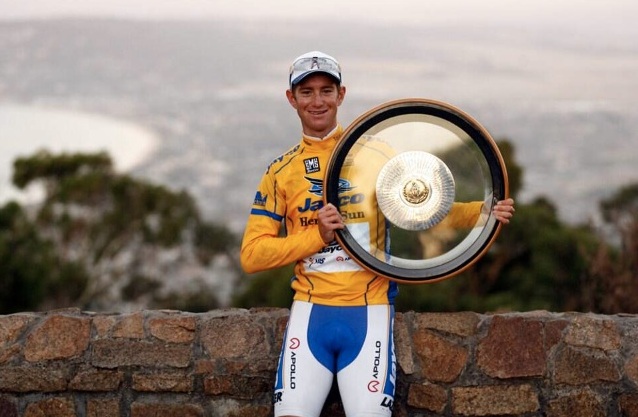
A couple of days ago, Trek Factory Racing announced the latest transfer for next season: Calvin Watson. Many were surprised by this move, but they shouldn’t have been, because the young Australian, despite of his age (20 years), had some impressive results, winning in the past three seasons the Tour du Valromey, the Coppa Linari and the Herald Sun Tour (one of the most important races from Down Under).

Wanting to know how he is feeling after signing the contract with Trek Factory Racing, what are his expectations for 2014 and what races he dreams of winning in the future, I’ve contacted Calvin this week and he made some time to answer my questions.

– Calvin, your transfer to Trek was for many a surprise. Were you also surprised when the team contacted you for this move?

I guess to some people my signing with Trek came as a surprise, as I am still quite young and haven’t had a huge amount of victories. It’s an amazing opportunity to continue to learn and develop in a professional environment, and I am excited to make the most of it!

– When did the negotiations started? 

Negotiations began early in the season, through my agent, Alex Carera. Only in August though I realised that signing with Trek was about to become reality. To finally reach the goal that you have been aspiring to for many years, it was a very special moment.

– And how are you feeling now, knowing that next year you will race in the World Tour?

Of course, it’s a very exciting time and I have to enjoy it! But there is no doubt that the real hard work begins now, because stepping up to the World Tour is going to be a big jump. With the support of the team and the right people around me, I feel as though I can make this progression, there will be a huge amount of learning involved and I am really looking forward to that.

– People don’t know you very well, despite some very good results. Can you please tell us more about you, what’s your history with cycling? 

I’ve started racing bikes when I was about 12 years old, and since then I’ve never looked back. Cycling is one of those sports where once you start you never stop, you become addicted! There was some cycling history in our family, so maybe that is where it all stemmed from. I have been lucky enough to have some great mentors and coaches that have helped me to progress from juniors, through to U23s.

– How important was the Australian Institute of Sport in your development?

The Australian Institute of Sport has been instrumental in my development, the program gives a clear pathway for young Australian riders. It’s a very professionally run set up and it gives many U23 Australian riders a stepping stone for moving up to the World Tour. Without their support over the last four years I wouldn’t be where I am now. There are very close ties with Orica-GreenEdge now, and that gives a lot of young Australians something to strive towards, which is only healthy for the growth of cycling.

– What meant for you winning the Herald Sun Tour ahead of many riders with much more experience?

The Herald Sun Tour was a very special victory! To win on my 20th Birthday, on my local roads seemed quite surreal, and to have my family and friends there supporting was a great moment! Having my name on the Honour Roll, next to the likes of Bradley Wiggins, Simon Gerrans or Nathan Hass is quite special in itself.

– In 2013, you’ve raced and trained for a couple of months in Europe. How was that experience? 

For the last two years I have spent 6-8 months of the year in Europe racing and training. Europe is the home of cycling, so for Australians who have the goal to turn professional, racing in Europe is essential.

– You’re a rider who had good results in one-week stage races and punchy one-day races. Would you like these be your focus for the future?  

Of course, I would love to develop into a stage racer in the future. Though for now I am looking forward to following the advice and structure that the team will put in place for me, to hopefully get the best out of myself. There is a huge amount of experience and knowledge within the team so I look forward to learning from them!

– And what races do you dream of winning as a pro? 

Obviously everyone dreams of winning a Grand Tour, though I do love the big one day classics. There will be a strong focus on the one-day races in the team, so we will see what path the team wants me to take.


Axel Merckx: “Bissell has an unique programme”

Trek-Livestrong started in 2009, changed its name and riders over the years, but one thing remained certain: the ability of the team to nurture young talents and launch them on the big stage of cycling. This being said, in the past five years Axel Merckx’s team sent to the World Tour no less than 14 riders, among those being Taylor Phinney, Alex Dowsett, Jesse Sergent, Joe Dombrowski, Ian Boswell, Lawson Craddock or Jasper Stuyven.

In the second half of 2013, question marks were being raised concerning the continuity of the US team, after Trek decided to focus on the World Tour team, but Axel Merckx managed to secure the future of his project by convincing Bissell to come aboard for 2014 as the main sponsor. Next season, the Continental team will have 14 riders – Nicolai Brøchner, Clément Chevrier, Geoffrey Curran, Gregory Daniel, Alex Darville, Ryan Eastman, Tao Geoghegan Hart, James Oram, Logan Owen, Christopher Putt, Tanner Putt, Keegan Swirbul, Nathan Van Hooydonck and Ruben Zepuntke – and Axel Merckx, the manager of the team, hopes for a new series of great results.

– Mister Merckx, what does the Bissell project mean to you?

To me it’s a continuation of what I’ve been doing for the last five years. Working with the young U23 riders is something I’ve really enjoyed doing, and thankfully Mark Bissell was willing to invest in youth. Because of the project it has with the World Tour team, Trek couldn’t continue as our sponsor, but they are still supporting us and that’s very good.

– How difficult was to secure a future for the team in the last couple of months?

It was not very easy. Unfortunately, the  economy and the cycling industry economy had a hard time and it’s always difficult finding sponsorship. Many teams are disappearing and you have to persuade the sponsors to invest in the youth, were they have a great amount of exposure, but at a different level then that of a World Tour team. In the same time, it’s true that there’s a lesser investment than that of a World Tour team, so it depends on what the sponsors are looking for.

– The contract with Bissell is for just one year?

It is, yes.

– And is there an option to sign for more years after the 2014 season?

There is an option for Bissell to continue up until August, but my ambition and my will is to secure the future of the team with Bissell for a longer time, but that will depend on many factors and the job we’re doing.

– I presume the main objectives of the team remain the same for next year: California, Colorado and Utah.

Indeed. It’s going to be roughly the same schedule that we had in the past two years and I hope we are going to be successful.

– If you look back at the past five years, what were the best moments of the team?

That’s a very difficult question. It’s hard to talk about just one moment, because I’ve had many satisfactions over the years and we’ve had great results with Taylor Phinney, Alex Dowsett, George Bennett, Ian Boswell or Joe Dombrowski. That’s why this project is so amazing, you can’t really say a moment was the best, more important is the consistency we’ve had over the years in getting results with these riders.

– Who will this rider be in 2014?

I don’t know, is as I said before, that’s the beauty. I hope there will be many successful stories like the ones I’ve had this year, but there’s always a question mark. I know I have many good talents for next season, but there’s a question: will they have a breakthrough next season or later in their career? You can’t know this ahead of time. You can see there’s a stable progression, look at Tanner Putt, he is a well-established rider in the team, was national champion this year, he still has room to improve, and I hope that he can be one of those guys for next season.

– You’ve made a couple of interesting transfers, bringing to the team talented riders like Tao Geoghegan Hart, Nathan Van Hooydonck or Clément Chevrier.

I try to get anybody on board that I think my programme is going be beneficial for them, to give them a great amount of exposure internationally, not only in Europe, but also in big races. There aren’t a lot of programmes like mine, as a matter of fact I can’t see another programme like mine, where these kids are able to ride in big races, like California or Colorado, where there are also teams we see in the Tour of France. This is very important, it pushes them and it tells them how much work they have to do in order to get there.

– I know you are happy for them when they leave to World Tour teams, but isn’t there also some regret?

The only regret I have is that I don’t get to work anymore with them personally. Throughout the years, you develop a relationship with those riders and you create a certain bound between those riders and you. I’m sad when they leave, but at the same time I’m excited to see them developing and how they are going to do in the big teams.

– You worked with many young American riders in the last couple of years, so I want to ask you what does the future look like for this country?

USA Cycling is doing a very good job at developing riders and this year we had a very good relationship with them. They have the same project and the same final goal that I do, and that is to prepare those guys in the best way to make them really good World Tour riders. As long as we all understand that, then we have a common goal and the success will come by itself. They are investing a lot in youth, in juniors, and automatically they give those guys opportunities to race in Europe and in the United States. If we can keep going like this, we can really have some great results in the future.

Navigare în articole