Cafe Roubaix
Despre ciclismul de azi şi cel de altădată
Retired World Tour and Pro Continental riders in 2015
| Name | Age | Team | Best result of the season |
| Ivan Basso | 37 | Tinkoff-Saxo | 17th in Gran Premio di Lugano |
| Giovanni Bernaudeau | 32 | Europcar | 2nd in Tropicale Amissa Bongo |
| Hilton Clarke | 36 | UnitedHealthcare | ―――――――――― |
| Francis De Greef | 30 | Wanty-Groupe Gobert | 7th in stage 4 of Tour of Norway |
| Kevin De Weert | 33 | LottoNL-Jumbo | 47th in stage 1 of Volta ao Algarve |
| Aleksandr Dyachenko | 32 | Astana | 5th in stage 7 of Tour of Hainan |
| Jimmy Engoulvent | 35 | Europcar | 4th in Tro-Bro Leon |
| Cadel Evans | 37 | BMC | 3rd in Tour Down Under |
| Campbell Flakemore | 23 | BMC | 4th at the National Championships |
| Robert Förster | 37 | UnitedHealthcare | 7th in stage 4 of Tour de Slovenie |
| Davide Frattini | 37 | UnitedHealthcare | 24th in stage 1 of World Ports Classic |
| John Gadret | 36 | Movistar | 7th in stage 6 of Criterium du Dauphiné |
| Anthony Geslin | 35 | FDJ | 8th in Paris-Camembert |
| Florian Guillou | 32 | Bretagne-Séché | 25th in stage 2 of Tropicale Amissa Bongo |
| Ken Hanson | 33 | UnitedHealthcare | 5th in stage 4 of Tour de Langkawi |
| Vincent Jérôme | 31 | Europcar | 17th in E3 Harelbeke |
| Ted King | 32 | Cannondale-Garmin | 12th at the National Championships |
| Alexander Kolobnev | 34 | Katusha | 26th in Le Samyn |
| Brett Lancaster | 36 | Orica-GreenEdge | 36th in Vuelta a la Rioja |
| Darren Lapthorne | 32 | Drapac | 11th in stage 2 of Tour de Taiwan |
| Pablo Lastras | 39 | Movistar | 25th in stage 4 of Tour Down Under |
| Bjorn Leukemans | 38 | Wanty-Groupe Gobert | Won Ronde van Limburg |
| Klaas Lodewyck | 27 | BMC | 6th in Handzame Classic |
| Maxime Mederel | 35 | Europcar | 19th in Criterium International |
| Daan Olivier | 22 | Giant-Alpecin | 18th in Vuelta a Murcia |
| Alessandro Petacchi | 41 | Southeast | 4th in stage 8 of Tour of Turkey |
| Andrea Piechiele | 28 | Bardiani | 2nd in stage 7 of Tour of Turkey |
| Jérome Pineau | 35 | IAM Cycling | 8th in stage 1B of Ruta del Sol |
| Mattia Pozzo | 26 | Nippo-Vini Fantini | 4th in stage 3 of Tour of Qinghai Lake |
| Thomas Raeymaekers | 22 | Novo Nordisk | ―――――――――― |
| Dominique Rollin | 33 | Cofidis | 27th in stage 2 of Paris-Nice |
| Hayden Roulston | 34 | Trek Factory Racing | 21st in Cadel Evans Road Race |
| Cristiano Salerno | 30 | Bora-Argon 18 | 22nd in stage 4 of Criterium du Dauphiné |
| Emanuele Sella | 34 | Androni Giocattoli-Sidermec | 16th in stage 5 of Vuelta al Tachira |
| Gert Steegmans | 34 | Trek Factory Racing | 13th in stage 1 of Tour of Oman |
| Simone Stortoni | 30 | Androni Giocattoli-Sidermec | 9th in Tour de Slovenie |
| Simon Strobel | 29 | Novo Nordisk | 42nd in stage 2 of Volta do Rio Grande do Sul |
| James Vanlandschoot | 37 | Wanty-Groupe Gobert | 7th in stage 3 of Tour de Luxembourg |
| Arthur Vanoverberghe | 25 | Topsport Vlaanderen | 21st in Grand Prix La Marseillaise |
| Kristof Vandewalle | 30 | Trek Factory Racing | 3rd at the ITT National Championships |
| Jussi Veikkanen | 34 | FDJ | 2nd at the National Championships |
| Romain Zingle | 28 | Cofidis | ―――――――――― |
Rider of the week
Paris-Tours, the most underrated Classic in terms of prestige, was won this year by Matteo Trentin, one of the most underrated one-day riders of the current peloton, who found a great way to end his season, during which he raced 78 days, for a total of more than 13 000 kilometers. The 26-year-old cyclist was in a fantastic shape now that the season was reaching its conclusion, with a stage victory in the Tour of Britain, as well as two podiums in Coppa Bernocchi and Gran Piemonte, where he was each time among the most strongest riders in the race.
As always, the 231 km-long Paris-Tours was a fast and eventful race right from the start, with attacks galore and a thrilling finish, which saw a two-man battle between Trentin and Tosh Van Der Sande, after Greg Van Avermaet, the other rider to attack in the group, had a flat tire that took him out of contention. In the end, despite leading out for the last kilometer, the Etixx-Quick Step cyclist still had enough left in the tank to outsprint Lotto-Soudal’s Belgian and score his first win in a one-day race.
Besides the victory he landed on Sunday, Matteo Trentin also received the Ruban Jaune, which rewards the cyclist who records the fastest average speed in a cycling race of over 200 kilometers, this being for the ninth time in history that this honour goes to the winner of Paris-Tours (49,641 km/h in 2015). More important, after confirming he has what it takes to be a protagonist and taste success in the Classics, the Italian could now become one of Etixx-Quick Step’s protected riders for the 2016 Spring campaign, when he could get a chance to confirm last week’s victory by adding a Monument to his growing palmares.
2015 Final World Tour Standings
Individual
1 – Alejandro Valverde – 675 points
2 – Joaquim Rodriguez – 474 points
3 – Nairo Quintana – 457 points
4 – Alexander Kristoff – 453 points
5 – Fabio Aru – 448 points
6 – Chris Froome – 430 points
7 – Alberto Contador – 407 points
8 – Rui Costa – 324 points
9 – Greg Van Avermaet – 324 points
10 – Thibaut Pinot – 319 points
11 – Richie Porte – 314 points
12 – John Degenkolb – 302 points
13 – Rigoberto Uran – 301 points
14 – Geraint Thomas – 283 points
15 – Tom Dumoulin – 271 points
16 – Simon Spilak – 269 points
17 – Peter Sagan – 257 points
18 – Domenico Pozzovivo – 242 points
19 – Vincenzo Nibali – 232 points
20 – Michael Matthews – 321 points
Teams
1 – Movistar – 1619 points
2 – Katusha – 1614 points
3 – Sky – 1378 points
4 – Etixx-Quick Step – 1158 points
5 – Astana – 1106 points
6 – BMC – 1010 points
7 – Tinkoff-Saxo – 925 points
8 – Orica-GreenEdge – 845 points
9 – Lotto-Soudal – 832 points
10 – Giant-Alpecin – 773 points
11 – AG2R – 617 points
12 – Lampre-Merida – 586 points
13 – Trek Factory Racing – 529 points
14 – FDJ – 499 points
15 – LottoNL-Jumbo – 485 points
16 – Cannondale-Garmin – 390 points
17 – IAM Cycling – 229 points
Nations
1 – Spain – 1945 points
2 – Italy – 1106 points
3 – Colombia – 1099 points
4 – Great Britain – 1041 points
5 – Belgium – 905 points
6 – France – 881 points
7 – Netherlands – 848 points
8 – Australia – 777 points
9 – Germany – 587 points
10 – Norway – 453 points
11 – Poland – 376 points
12 – Portugal – 355 points
13 – Czech Republic – 306 points
14 – Slovenia – 294 points
15 – Switzerland – 270 points
16 – Russia – 257 points
17 – Slovakia – 257 points
18 – U.S.A. – 158 points
19 – Denmark – 111 points
20 – Ireland – 111 points
2016 Giro d’Italia
Stage 1 – Apeldoorn-Apeldoorn – 9,8 km (May 6th)

Stage 2 – Arnhem-Nijmegen – 190 km (May 7th)
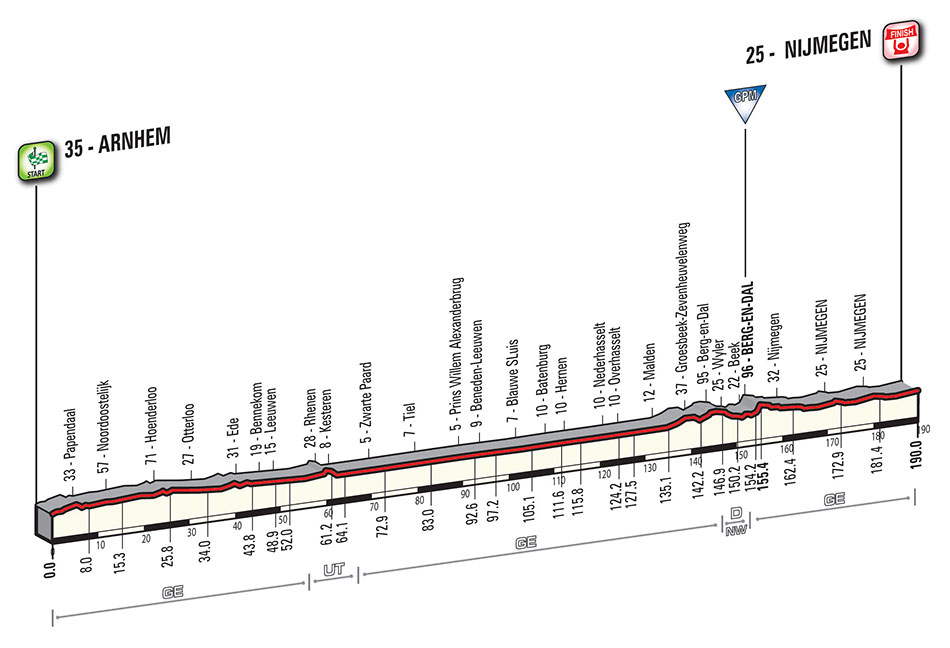
Stage 3 – Nijmegen-Arnhem – 189 km (May 8th)

Stage 4 – Catanzaro-Praia a Mare – 191 km (May 10th)
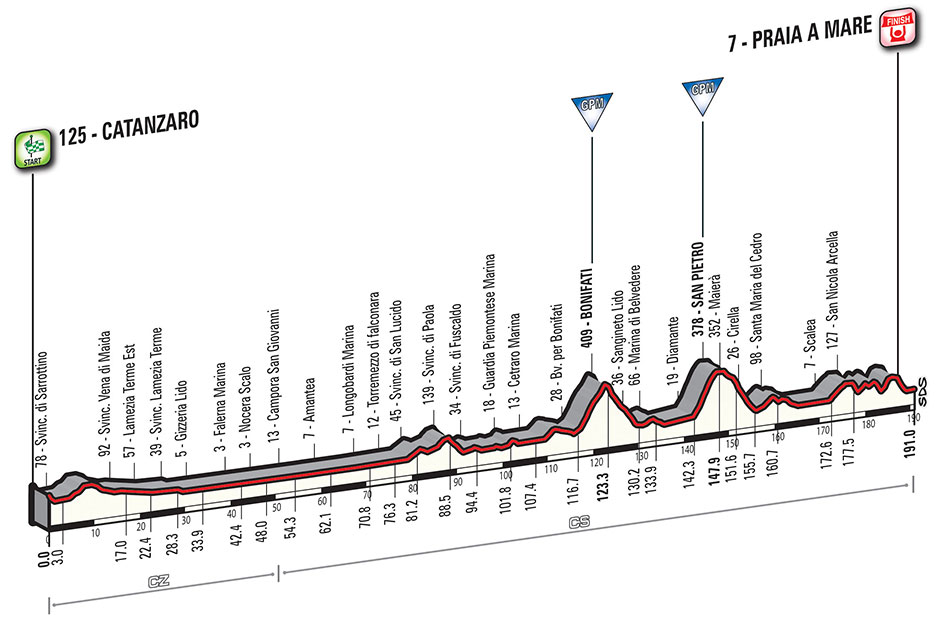
Stage 5 – Praia a Mare-Benevento – 233 km (May 11th)

Stage 6 – Ponte-Roccaraso – 165 km (May 12th)

Stage 7 – Sulmona-Foligno – 210 km (May 13th)
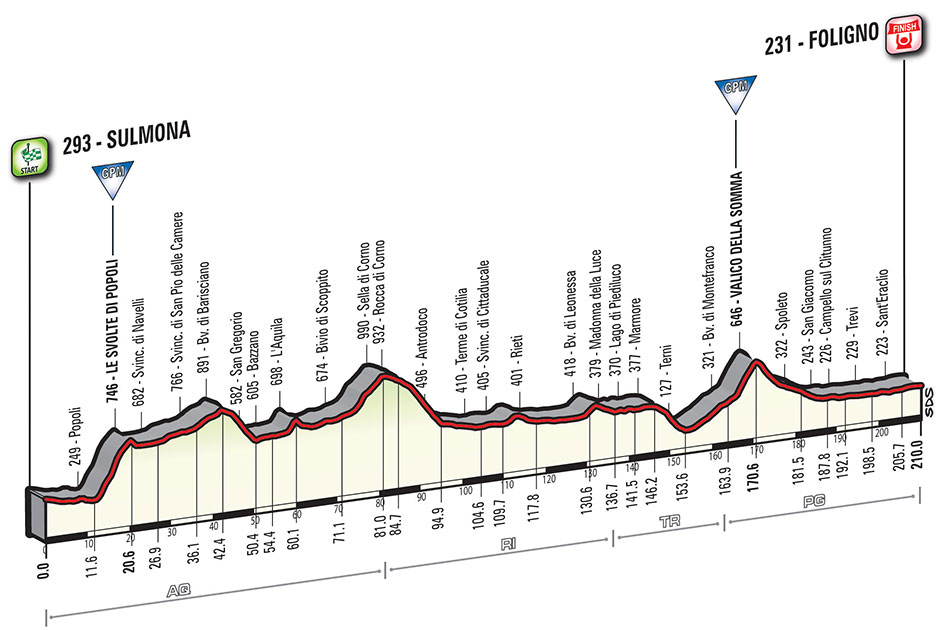
Stage 8 – Foligno-Arezzo – 169 km (May 14th)
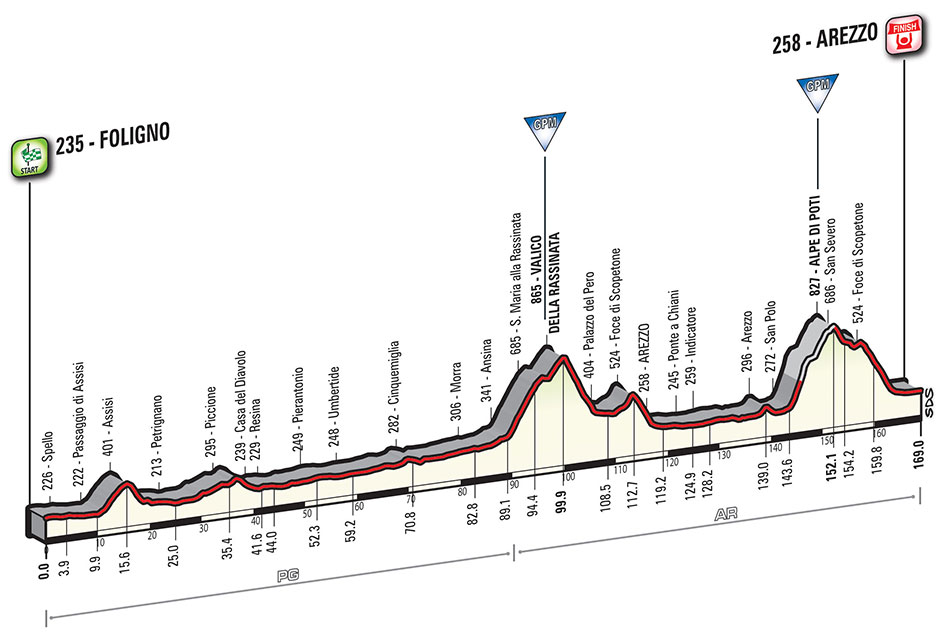
Stage 9 – Radda in Chianti-Greve in Chianti – 40,4 km (May 15th)
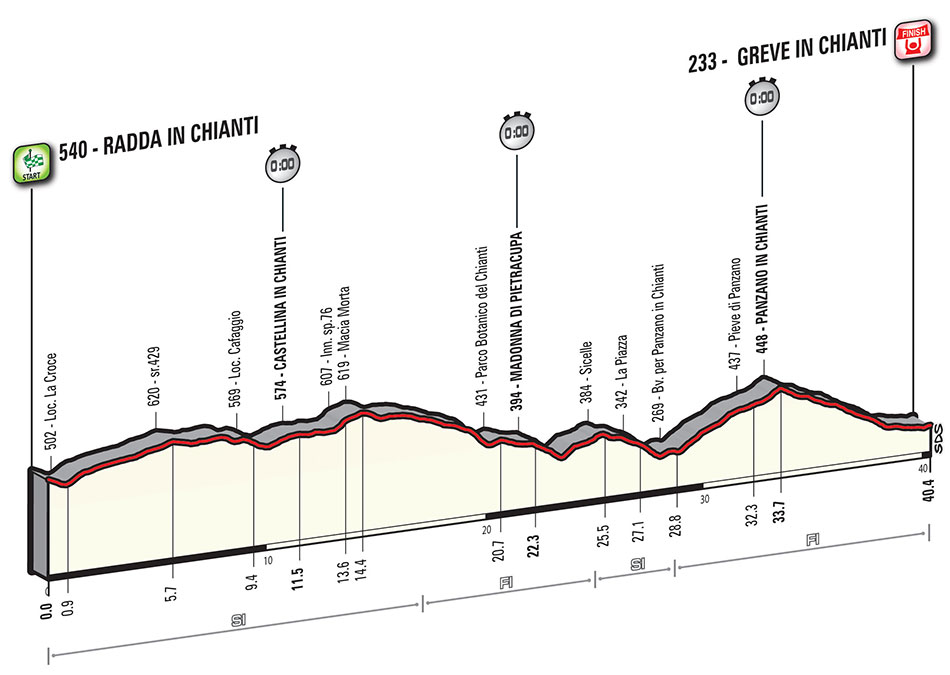
Stage 10 – Campi Besenzio-Sestola – 216 km (May 17th)

Stage 11 – Modena-Asolo – 212 km (May 18th)

Stage 12 – Noale-Bibione – 168 km (May 19th)

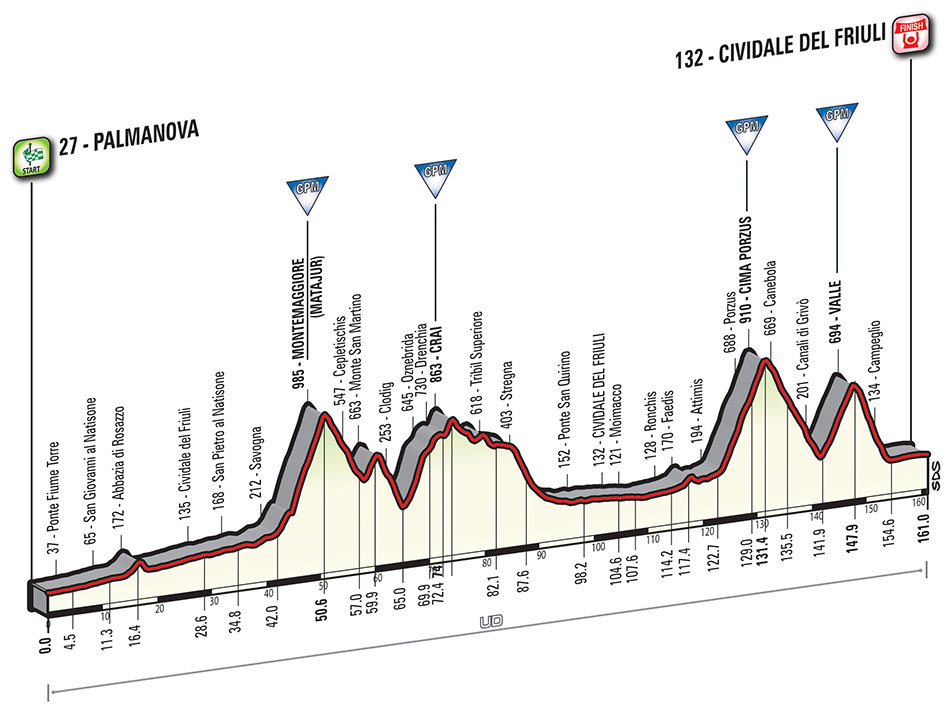
Stage 13 – Palmanova-Cividale del Friuli – 161 km (May 20th)
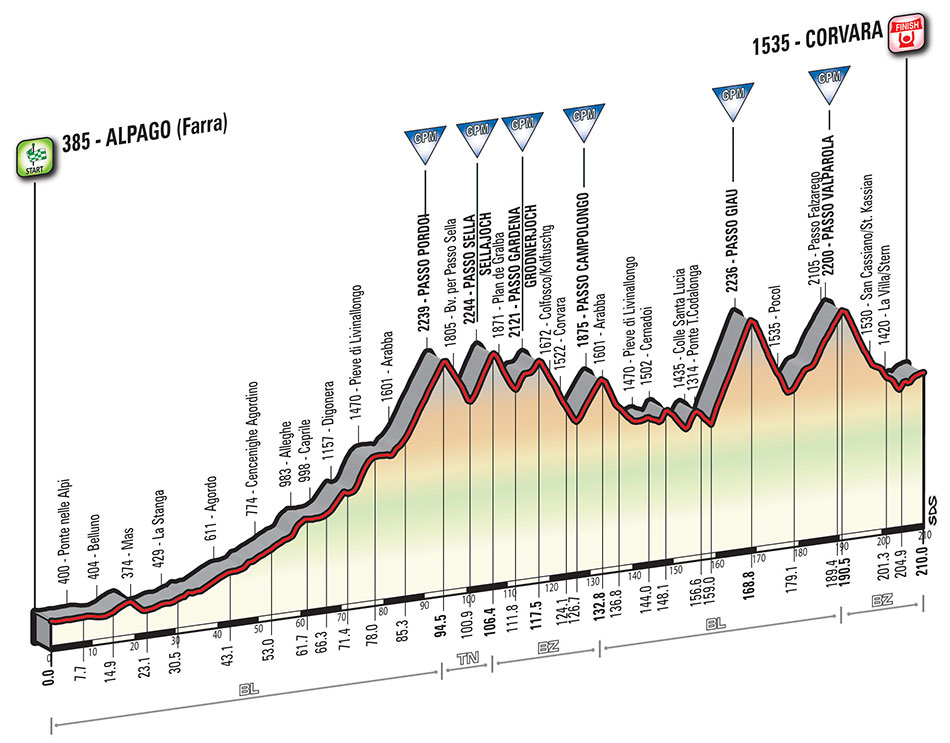
Stage 14 – Alpago-Corvaro – 210 km (May 21st)
Stage 15 – Castelrotto-Alpe di Siusi – 10,8 km (May 22nd)

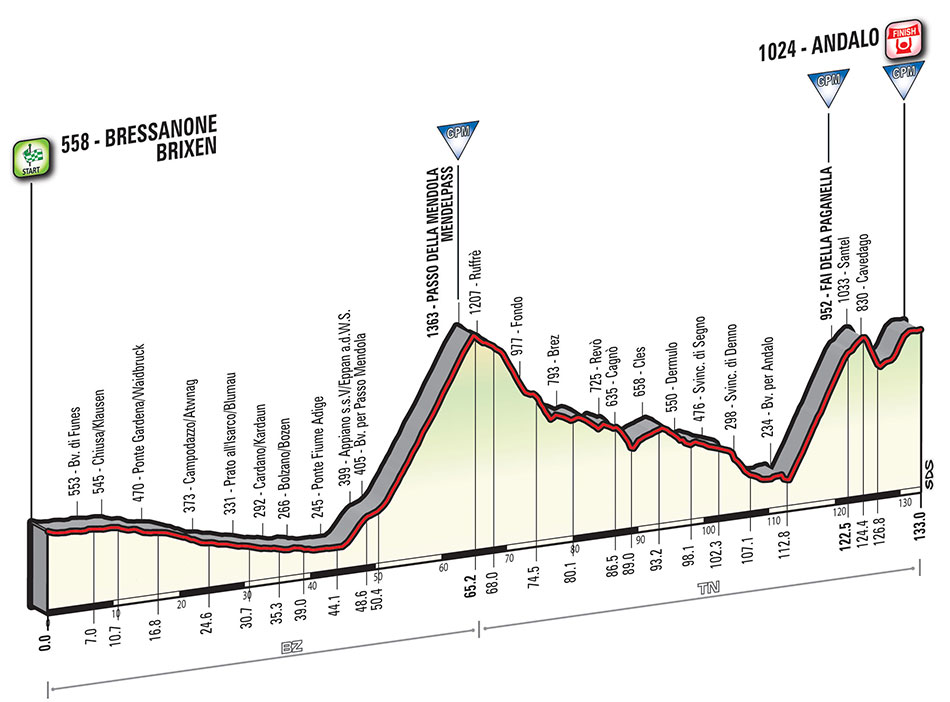
Stage 16 – Bressanone-Andalo – 133 km (May 24th)
Stage 17 – Molveno-Cassano d’Adda – 196 km (May 25th)

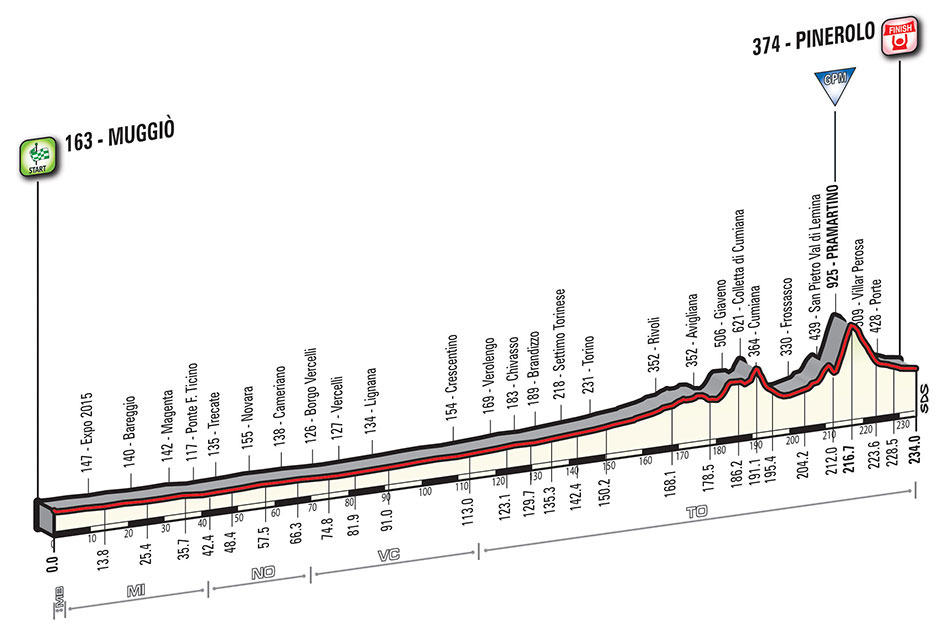
Stage 18 – Muggio-Pinerolo – 234 km (May 26th)
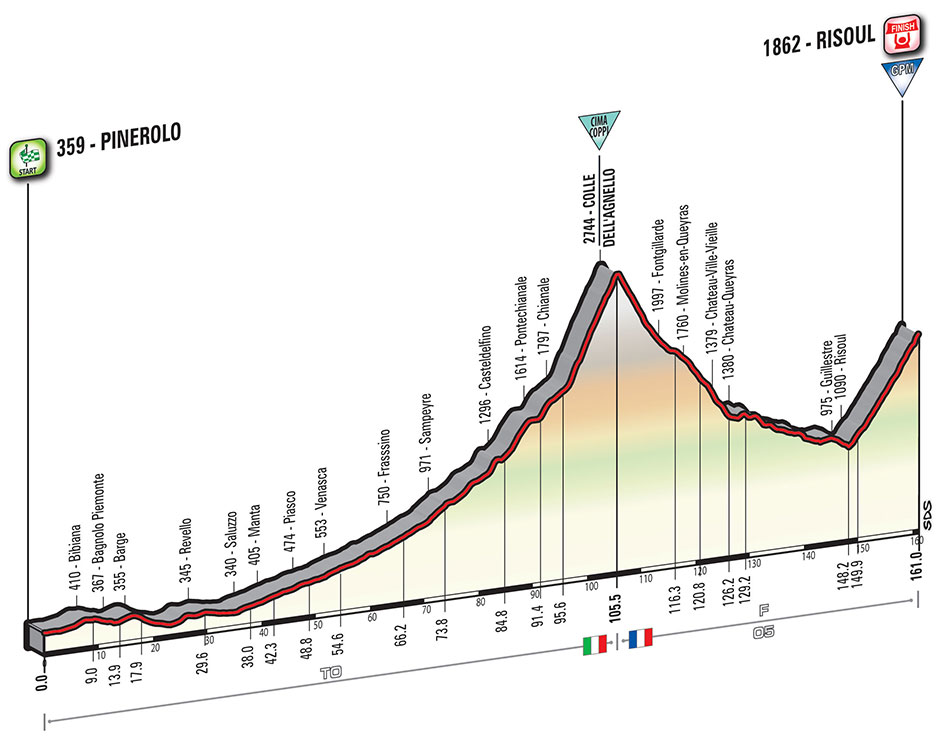
Stage 19 – Pinerolo-Risoul – 161 km (May 27th)
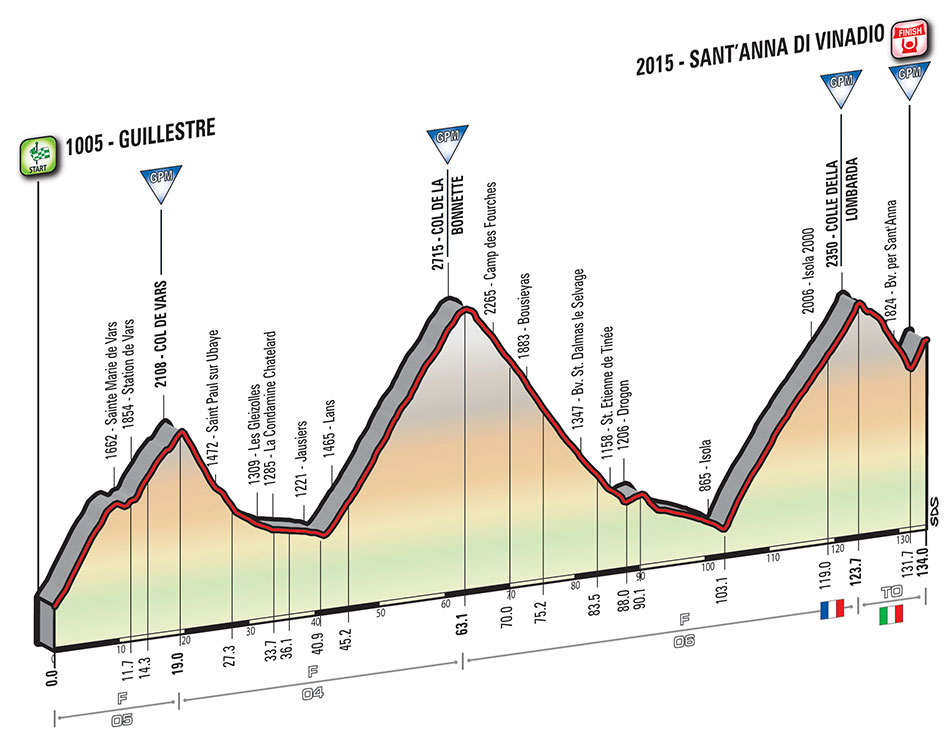
Stage 20 – Guillestre-Sant’Anna di Vinadio – 134 km (May 28th)
Stage 21 – Cuneo-Torino – 150 km (May 29th)

Rider of the week
He’s only 30-years-old, but Vincenzo Nibali already can be regarded as a cycling legend, considering he’s won all three Grand Tours and the Giro di Lombardia, thus becoming only he fourth rider in history to do this feat, following Felice Gimondi, Eddy Merckx and Bernard Hinault. Going into the season’s final Monument with high ambitions and an excellent form, underlined by his recent victory in Tre Valli Varesine, just 24 hours after returning from the Richmond World Championships, the Italian champion was keen on doing everything he could to finally land a victory that has eluded him in the past seasons.
The overwhelming favourite at the start of the 109th Giro di Lombardia, Vincenzo Nibali made an excellent race, especially tactically, and ended his season on a high note, helped by an incredible team of Astana, with Mikel Landa and Diego Rosa ready to chase down every opponent and pull for him on the arduous climbs of a parcours which was dubbed by many as the toughest and the most thrilling in the history of the Classic.
Maybe Nibali wasn’t the best on the uphill, but he surely was by far the best descender in the group, making the most out of his skills once the Civiglio ascent was over, with 16 kilometers to go, and pushing himself to the limit on each hairpin. After giving it all on that terrain and extending his lead to more than 40 seconds, the Astana rider begin to lose some of this chunk on San Fermo della Battaglia, but his victory was still assured, as he entered the last three kilometers with a 15-second advantage over Daniel Moreno.
By winning the “Classic of the Falling Leaves” the way he did, Vincenzo Nibali – who took Italy’s first Monument victory in seven years – showed again his class, because even when on a day he wasn’t the strongest one out there, he was still capable of inventing something to surprise his opponents and take a Monumental triumph, which proved, once again, that he’s the most versatile Grand Tour cyclist of the current peloton.
2015 Giro di Lombardia Preview
It’s that time of the year again, the time for the last Monument of the season, the Giro di Lombardia, which also counts for the final World Tour event of 2015. Held for the first time in 1905, it soon turned into one of the most important races of the calendar; a huge contribution to its growing prestige came as a result of the likes of Costante Girardengo, Alfredo Binda, Gino Bartali and Fausto Coppi and their memorable victories, as well as the presence of Madonna del Ghisallo, an iconic climb of the sport and home to cycling’s most famous museum.
Even though other races are taking place after Giro di Lombardia (Coppa Sabatini, Paris-Tours, Tour of Abu Dhabi), the Italian Classic is still regarded as the most fitting ending of the year, a race in which riders say goodbye to a great or disappointing season, while others draw the curtain on their career and think about a new beginning in their life. On top of that, it’s an excellent opportunity for many cyclists to save their year or cape off the season with a huge victory, one for the history books.
The course
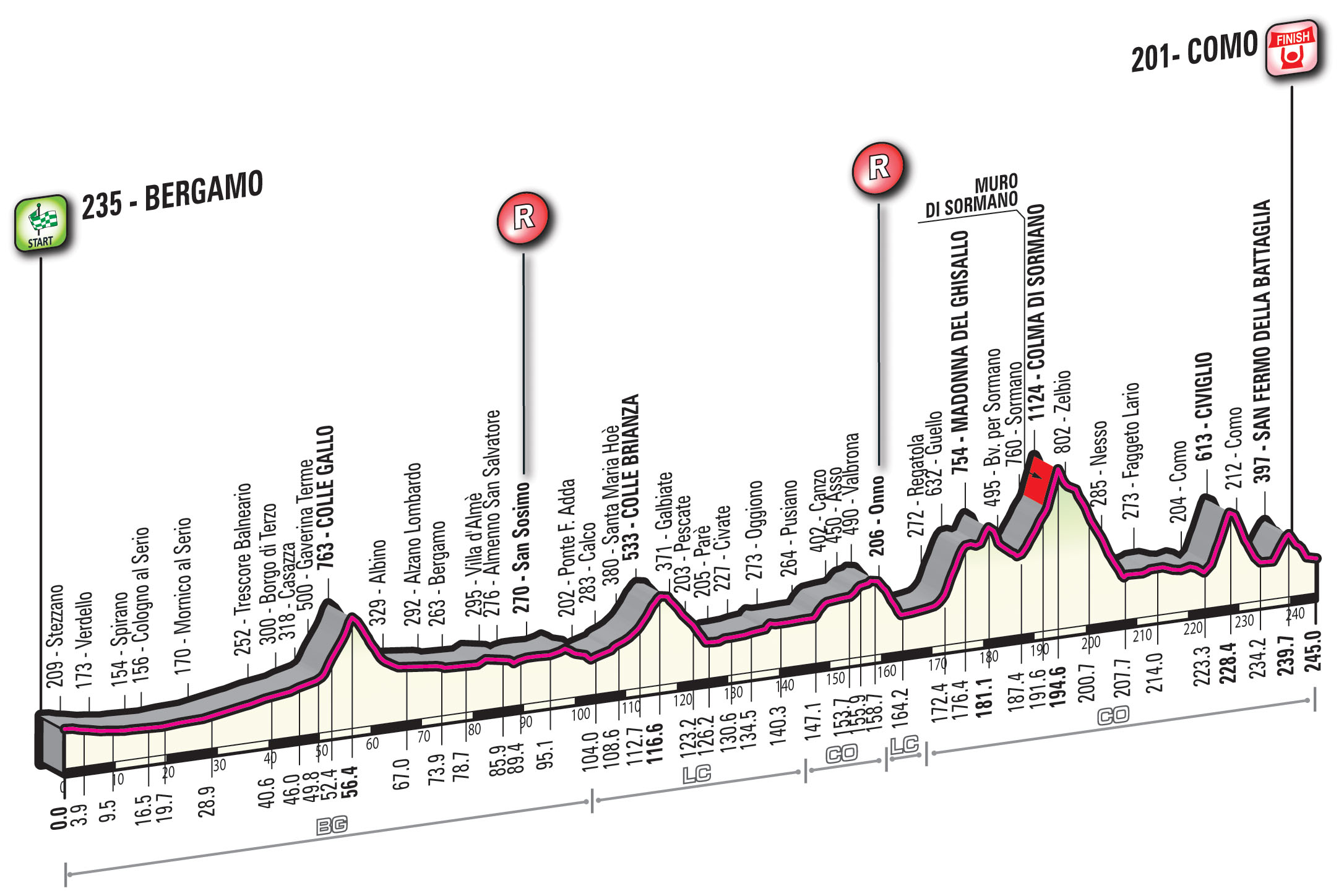
In 2015, the 245 km-long race sets off from Bergamo, with the revamped route initially leading through the Bergamo plain and then up along the Val Cavallina, all the way to Casazza, for the first climb of this race: Colle Gallo (7,1 kilometers, 6% average). A fast-running descent leads back from Val Seriana to Bergamo; here, the course goes back on flat roads and eventually arrives in Brianza. The course passes briefly across Colle Brianza and descends into Pescate, then heads for Valmadrera and Oggiono. Finally, it rolls past Pusiano and Asso, and drops down into Onno, heading for Bellagio, where the Madonna del Ghisallo (8,5 kilometers, 6,2% average) climb begins.
The ascent has a maximum gradient of 14%, on a wide road, with several hairpins. The descent runs quickly on long, straight stretches up to Maglio, where the Colma di Sormano climb begins abruptly. After a few kilometres with a moderate gradient, a few hundred metres past Sormano, the route turns left to tackle the Muro di Sormano, the hardest section of the Sormano climb (2 kilometers at a 15% gradient), which was introduced in the race half a century ago. The road is tight and very steep, and it runs partly through the woods, with very narrow hairpins and sharp gradients exceeding 25% and reaching almost 30%, after about one kilometer.
After clearing the Colma, the road climbs down into Nesso (initially on apparently flat ground, followed by a very technical descent with several hairpins on a narrowed roadway). Here, the route takes the coastal road that leads to Como. A harsh climb up to Civiglio follows (4,2 kilometers), with steady 10% gradients, which provide an excellent platform for a late attack; the route then descends, runs through Como again, and heads for the final climb in San Fermo della Battaglia.
The last 10 kilometers begin in urban Como and run along wide avenues, up to the railway underpass, where the final climb towards San Fermo della Battaglia begins. The punchy 3,3 km-long hill has a gradient of nearly 7,2%, on a narrowed roadway with a rough road surface and several hairpins, that lead all the way up to the summit (around five kilometers from the finish). The fast and challenging descent runs along a wide and well-paved road, with two well-lit tunnels and two wide roundabouts, and it ends one kilometer before the finish. One last, wide left-hand bend can be found 600 meters before the finish.
The favorites
It’s been a couple of years since a rider lined-up for the “Classic of the Falling Leaves” as the overwhelming contender for the victory, such as is the case this season with Vincenzo Nibali, but truth being told, the triple Grand Tour winner deserves to be considered the prime pick, because he is in great form – maybe his best in 2015 – and is very motivated to take his maiden Monument, and the first of Italy’s in the past seven years.
Second in Coppa Agostoni, first in Coppa Bernocchi, third in Memorial Marco Pantani, fifth in Gran Premio Industria e Commercio di Prato and first in Tre Valli Varesine – this is Nibali’s palmares in the five races he rode on home turf this Autumn, races in which he had a point to prove following his disqualification in the Vuelta a España. Supported by a very strong Astana outfit, which includes Mikel Landa and Milano-Torino winner Diego Rosa, Vincenzo Nibali – who is one of the finest tacticians of the peloton – will more than sure put on a great attack which he hopes to land him a memorable success in Como.
Two-time Lombardy winner Joaquim Rodriguez appeared to be at a high level for the last World Tour appointment of the season, but he injured his right knee in training on Friday, the scans revealing a big hematoma, and will have to miss the race. Despite this setback, the Russian squad still has a good card to play, the in-form Daniel Moreno, who will get the opportunity to ride the season’s fifth and final Monument as team leader for the first time in his career.
Another good bet for a win looks to be Alejandro Valverde, one of the most consistent riders of the year, and already 2015 World Tour champion. Twice second in the “Classic of the Falling Leaves” at the past two editions, Movistar’s leader comes here after finishing fifth at the Richmond World Championships and hopes to carry that form into the last Classic of the season and thus score a fourth victory in a Monument, following his Liège–Bastogne–Liège treble (2006, 2008 and 2015).
33-year-old Philippe Gilbert – who is lining-up with a team that includes Darwin Atapuma, Dylan Teuns and Samuel Sanchez, the rider he defeated in 2010 – is also expected to make a move in the finale, the Belgian being the last rider to win in Como. 2012 world champion, Gilbert will be happy to see the race return to a hillier terrain, one which is much to his liking. On top of that, people shouldn’t forget he has a good sprint, so if he makes the final selection, Philippe Gilbert can take the victory from that reduced group.
Other riders to look out for in their bid to deliver a big result are Tim Wellens, Adam Yates, Rafal Majka (who is coming here after finishing second in this week’s Milano-Torino), Thibaut Pinot, Jan Bakelants (the impressive winner of Gran Piemonte), Bauke Mollema, Alexis Vuillermoz, Tom-Jelte Slagter (who was enjoying a great run before the World Championships) and 2014 champion Daniel Martin.
Race stats
– Fausto Coppi is the rider with the most wins, five, between 1947 and 1954
– When it comes to the number of podiums, Gino Bartali is first, having finished nine times in the top three
– 11 countries have had a champion so far, with Italy topping the nations standings (67 victories)
– No rider from outside of Europe has ever won the race
– Longest dry spell of the hosts was recorded between 1988 and 1994
– Paolo Bettini is the last world title holder to win the race (2006)
– Since Damiano Cunego, in 2008, no Grand Tour champion has won the the Giro di Lombardia
– Shortest edition took place in 1942 (184 kilometers), while the editions held between 1964-1975 and in 1978 were the longest ones, 266 kilometers
– Milan, Como, Monza, Varese, Cantu, Bergamo, Mendrisio and Lecco are the cities who got to host the start or the finish of the race
– Biggest ever winning margin was recorded in 1905, when Giovanni Gerbi and Giovanni Rossignoli were separated by 40 minutes and 11 seconds
– Giovanni Gerbi is also the youngest winner (20 years and 176 days), while Gaetano Belloni is the oldest one (36 years and 69 days in 1928)
– Four winners of the Piccolo Giro di Lombardia went on to take the victory in the pro race: Gaetano Belloni, Diego Ronchini, Sean Kelly and Moreno Argentin
– 25 teams (17 World Tour and 8 Pro Continental) will be at the start of this year’s race
– Damiano Cunego, Philippe Gilbert and Daniel Martin are the former winners lining-up for the 109th edition
– The 2015 Giro di Lombardia will mark 2542 days since the last Italian victory in a Monument
– 19-year-old Daniel Martinez is the youngest rider at the start; Davide Rebellin (44 years) is the oldest one
– Eduard Grosu will go down in history as the first Romanian cyclist to race the “Classic of the Falling Leaves”
Conclusions after the 2015 World Championships
Peter Sagan put to rest his inner demons and managed to land a huge victory for which he worked hard, especially in the second half of the season. After crashing out of the Vuelta a España, the 25-year-old Slovak rider of Tinkoff-Saxo traveled to the US and did a recon of the course, as he wanted to make sure of knowing every meter of the Richmond circuit. Then, in the day of the race, he decided to go all in on one card: that of an attack on the penultimate climb of the final lap, which helped him get clear and take the first huge victory of a career which should see many moments like the one in Richmond, especially as Sagan broke the duck and looks to be more mature in the way he thinks and acts during a race.
Michael Matthews was tipped for greatness on the Richmond course, especially as his development throughout the 2015 season was really outstanding. Australia did a perfect race on Sunday, that is until the last kilometer, when Simon Gerrans decided to work for himself and sprint for a medal, instead of chasing Peter Sagan and launching his teammate. It’s difficult to say if Matthews could have won the gold medal in case his countryman would have worked for him, but what happened in the Aussie team will go down in history as one of the many controversies that have emerged at the Worlds. As for Michael Matthews, although he has a bitter taste after Richmond, he should look to the future with optimism, because he’s jsut 25-years-old and other opportunities will surely come and he’ll have the chance of becoming the first U23 world champion to conquer the title in the pro ranks.
Italy entered the road race as one of the most solid, balanced and dangerous teams, despite not having a rider perfectly suited to this type of course. Vincenzo Nibali was in great form and everyone’s money was on an attack of the triple Grand Tour winner, which never came. Diego Ulissi was another name which sprang into mind for a late surge, but it also didn’t happen, the Lampre-Merida cyclist being almost invisible. Actually, the only cyclist of the “Squadra Azzurra” to make himself noticed was Elia Viviani, who followed a dangerous move in the closing stages of the race, without any luck, as his group was caught. Eventually, Giacomo Nizzolo came 18th, a disappointing outcome for Davide Cassani’s team, who needs to wait for at least one more year in order to fight for the gold medal.
The individual time trial provided one of the biggest surprises ever seen at the World Championships. Vasil Kiryienka, already winner of the similar race at the European Games in Baku, more than three months ago, put on a very strong ride in Richmond, which netted him the most important victory of his career. Bronze in Valkenburg, the 34-year-old Belarusian now took gold ahead of an Adriano Malori who proved that he has fully developed and can fight for the rainbow jersey at the future editions, after bringing Italy just its second medal in the discipline at the Worlds (first one came in 1994, when the time trial was introduced). Jerome Coppel rounded out the podium last Wednesday, showing some of the potential that made his countrymen predict a nice career when the French turned pro, back in 2008.
A first year neo-pro, Kevin Ledanois outwitted the pack with an attack on the penultimate climb and surged clear to become just the third U23 World Champion from France, in what was one of the most thrilling finishes the event has ever seen. Showing exceptional grit and determination, the 22-year-old rider of Bretagne-Séché attacked on the hardest part of the course and seized the moment, going all the way and getting a win that will redefine his career up until this point, but which will also add up to the expectations for 2016. Next year, Ledanois is going to be watched much closely and with a huge interest to find out if he can confirm, especially as his contract with the Pro Continental outfit will be up at the end of the season.
One year ago, Mads Würtz Schmitz wasn’t experiencing the best period of his career: the talented Danish rider was hit by crashes and injuries, and was overlooked by the national team for the Ponferrada World Championships, before taking a step back by signing with Continental team ColoQuick, as his team at that time – Cult Energy – decided not to extend his contract, just as it was preparing to apply for a Pro Continental licence. Despite this, Wurtz Schmidt didn’t give up, continued to work hard in order to return stronger, and eventually the results came in the second half of this season: U23 time trial national champion, winner of the ITT stage in the Denmark Rundt and of the world title. Now, after becoming just the fourth rider in history to take the rainbow jersey in both Junior and U23 races, Mads Würtz Schmitz can patiently wait for the World Tour teams to give him a call. More than sure, he’ll be a busy man in the next couple of weeks.
Just 19-years-old, Lennard Kämna looks to be the most fascinating prospect of the 1996 generation, his impressive palmares standing as testimony: Junior and U23 time trial national champion, Junior ITT world champion, Bundesliga and German Hill Climb champion, stage winner in Trofeo Karlsberg and the Giro della Valle d’Aosta. In Richmond, riding his first ever U23 World Championships, he came third in the individual time trial – just 21 seconds adrift – and tenth in the road race, two results which underlined his huge stamina, fantastic versatility and unlimited potential (for both time trials and stage races), attributes which are good omens for a great future. An extra reason to follow him closely in 2016, when he’ll turn pro with Cult Energy-Stölting Group.
Rider of the week
A big win has eluded Peter Sagan for a couple of years now. Ever since turning pro, he was destined to greatness, but he seemed to miss on the big opportunities, as was the case in Milan-Sanremo, the Tour of Flanders or Tour de France stages. He had all that it took to land a memorable victory, but for some reason the pieces of the puzzle never came together, and this situation led to seeds of doubt being planted in his mind and developing into a huge frustration which eventually put its tool for some time on his ride and results.
Besides that and the criticism coming from his team’s owner, people were starting to question the Slovak’s ability to go all the way in a 250 km-long race and began to dub him the “Perennial Second”. Things didn’t change after the first half of the season, inspite of his Tour of California win, the main reason being his near misses in the same Spring Classics and the Grande Boucle, but a more than encouraging sign came in the Vuelta a España, where he scored a stage victory and showed to be at a very high level, before being taken out by a TV moto.
Coming into the World Championships, Peter Sagan was seen as one of the biggest contenders for the rainbow jersey on the technical and inner-city road circuit of Richmond, despite the fact he had only two teammates and that his best result in the race was a sixth place, at the 2013 edition, in Firenze. But this time, in contrast to other events in which he started as a top favourite, he had a different approach, more commonly known in the peloton as the “ninja strategy”: the 25-year-old stayed “invisible” all day long, but always in the top 20, without chasing the attacks of others and spending his energy in futile actions.
Then, in the final lap, he pounced on the penultimate ascent of the day – the cobbled 185 m-long 23rd Street – and got clear from the pack, leaving behind the only two riders who tried to join him, Edvald Boasson Hagen (the 2012 runner-up) and Belgium’s Greg Van Avermaet. Pushing hard in the closing kilometers and never looking back, Sagan managed to increase his lead and hold off the frantic chase, before enjoying his biggest triumph up-to-date, one that he was waiting for too long and which will give a whole new dimension to his career.
After storming to this impressive and spectacular win, which proved he is more mature and down to earth than he was in his first seasons as a pro, Peter Sagan will now have to deal with the huge pressure the world title will bring next year, when he is going to try and earn his place in the elite club of world champions who haven’t been touched by the “rainbow jersey curse”.
 Cafe Roubaix